Sunday, September 14, 2025

Thank You So Much For-A-To Playing My Gamelan

Concept art of the Lost Kingdom from The Art of Super Mario Odyssey.

Something I admire about Nintendo’s approach to soundtracks is their composers' obvious inspiration from music traditions around the world. The best titles have an overall unifying musical identity, but will make use of heavy genre contrast to accentuate story elements or establish environments with distinct atmospheres. How well would the Twilight Princess’s Old Kakariko shooutout be remembered if it wasn’t accompanied by a Morricone-esque flute and sproingy Jew’s harp? We would never have seen Tom Brier's take on old Mario themes if not for Koji Kondo’s love affair with ragtime, and Wind Waker, a literal series sea change in style, wouldn't have felt quite as new if not for the Celtic-tinged main theme. 

With all that said, I want to draw attention in this post to a small but very memorable use of traditional music: the Indonesian gamelan. Gamelan is both a style of music and the collective name for the instruments that are played, most of which are metal percussion, which gives the music its distinct, fluid timbre, though flutes, string instruments, and singing may also be elements of the music.

Gamelan performance in Yogyakarta, Indonesia, in 2017. By Wikimedia user Pandjisaputra94, licensed under CC BY-SA 4.0.

Gamelan is a cultural tradition on the islands of Java and Bali, but even within this relatively small geographic distribution there are many variations in style, instrumentation, and scale. There exists several different gamelan scales, including the prominent 5-note slendro and the 7-note pelog scales. The variations of scale all have one thing in common, however, which is the effect of unfamiliarity to Western ears. This unfamiliarity has been used to various ends in a few Nintendo scores. 

Perhaps Nintendo’s first use of gamelan came in Super Mario 64, where frantic metallophones fall in under the melody of the Big Boo’s Haunt theme. The other components of the track aren’t exactly traditional, but the overall effect of the instrumentation is that the haunted house actually feels quite active and humming with energy.

Percussion instruments are unexpectedly scary in Big Boo's Haunt.

The foreign sound of gamelan, Nintendo discovered, is useful for scoring strange and eerie environments – it sounds like chimes, but not anything in alignment with the rest of a Western-style score. Spooky-sounding gamelan appeared again in Twilight Princess, when a repeating gamelan clip was woven into the game’s generic Twilight theme (and consequently Zant’s theme). Here the gamelan is front and center for some part of the track, making it feel as though the presence of twilight has affected the fundamental reality of Hyrule.

Eventually, Nintendo began to use gamelan for themes that were meant to sound more exotic than unnerving. Paper Mario: Sticker Star features a gamelan-driven theme for Chomp Ruins, a decaying temple deep in the jungle of World 5. While the gamelan mostly provides rhythm while flute and brass play melody, the flavor of the music -- propulsive, bright, and energetic -- is entirely set by the liquidy tone of the gamelan.

Kondo returned to gamelan for similar purposes in Super Mario Odyssey, in one of a handful of pieces he composed for the game (Naoto Kubo capably handles most of the score). The overcast, murky Lost Kingdom feels somewhat unfriendly, especially since Cappy is immediately stolen. Yet, after becoming familiar with the island’s gamelan theme, set in an unusual, loping 11/16 time signature, the place begins to feel special and warm, a mellow respite from the game’s big, character-filled other worlds. Most recently, gamelan shone in Echoes of Wisdom, where it features in the Faron Temple theme. The environment is humid and tropical, similar to the Lost Kingdom, and the theme complements it well.

These are the tracks that come to mind, but there may well be more that are unfamiliar to me. Let me know if there are others!
Friday, August 1, 2025

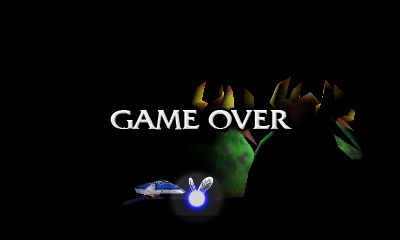
Death On Yoshi's Island


Once upon a midnight dreary, while I listened, weak and weary,
Over many a quaint and 16-bit soundtrack of Kondo yore,
While I nodded, nearly dreaming, suddenly there came a theming,
As of a hero “Game Over”-screening, dying in a later score.
“'Tis a Mario riff,” I muttered, “reused in another Zelda score
An old motif, and nothing more.”

Quoth the Kondo: “I hadn't noticed that before.”

Sunday, July 20, 2025

Bowser's Acupuncture Treatment

Welcome to the Lumbar Nook.

Cozy, warm studio space with a groovy 70s-style conversation pit, now renting at $3200 a month in the Bay Area.

It’s a location in Mario & Luigi: Bowser’s Inside Story, specifically somewhere inside Bowser’s lower spine, in between (or inside?) one of his lumbar vertebrae. After Bowser is betrayed by a trio of Fawful-loyal minions, he is stuffed inside a safe and then discarded into Princess Peach’s royal junkyard, where the safe shatters. Unfortunately for Bowser, the impact also leaves him in great pain. He pleads with Starlow to find some way to fix his spine, and so the erstwhile Brothers Mario travel to the Lumbar Nook.

Finding a boney sort of crevice in the tiny space, the two decide to drill into the spine. Toadsworth and Toadbert set a timer and have a cup of tea. After minutes of waiting, during which the player cannot do anything, the alarm sounds and the brothers reemerge to a rejuvenated Bowser. The Lumbar Nook is never visited again.

The whole episode is one of those Nintendo oddities that were particularly popular during the DS era, like that infamous puzzle in Phantom Hourglass which requires the player to close the DS to imprint a symbol from one screen to another. Is it engaging gameplay? Not at all. Does it ever play a role in the game’s mechanics again? Nope. Will you remember the Lumbar Nook segment once the story is all said and done? Probably not. But it’s endearing because of that baffling, almost standoffish quality, defying the player’s expectations of what should be happening minute-to-minute.

Which is why it’s weird that it can be skipped. Yes, in fact, Lumbar Nook Tea Time can be blown right through if you happen to speak to Toadbert at the right point in the story, specifically after defeating the memory brothers in Bowser’s brain. Toadbert describes a dream in which he is waiting in a small room drinking tea, and then (somehow) hears buttons being pressed – A B X Y L R Y X B A – which, if pressed during the wait, will shrink the time down to virtually nothing.

Screenshots from YouTube playthroughs of aWiibo and LuckySevenDX.

My question is: why? What’s the point in programming such a markedly odd little episode that asks the player’s patience, only to have it be skippable? Why include the skip code in an NPC dialogue that the vast majority of players are unlikely to see? Why does Toadbert have prophetic meta-dreams?

Feel free to ponder this over a nice cup of tea and some relaxing music. Or don’t.

SPIRIT: If Nintendo was an American company, we might have gotten a visit to the Chiropractic Zone, where the brothers play whack-a-mole with Bowser’s vertebrae and unintentionally doom him to quadriplegia.

Friday, July 11, 2025

Welcome to the Mansion

When I was around 11 years old, I loved a site called Waluigious. It was a blog, run by someone going by Artemendo, that featured dozens of bits of Mario ephemera, jokes, and idle wonderings. The site is only preserved now via the magic of the Internet Archive, but even so, many of the posts are no longer accessible.

I don’t know why Artemendo decided to give up Waluigious. Maybe I did at one time. But I felt a kinship for this writer who put all these trivial thoughts and ideas up for people like me to see – kids, at least in some proportion. As I’ve gotten older, I play videogames less and less. I have less patience for playing. There’s now a gnawing sense of “what else could I be doing?” that hangs over every minute. Still, though, my head is filled with these same thoughts that have been knocking around since I was first entranced by these old games. So, here is my outlet.

The Seashell Mansion is a location in Link’s Awakening where Link may trade seashells for various upgrades. It’s faintly mysterious – you are bestowed gifts by the unseen “Spirit of the Mansion” – and serves as a repository for these secret collectibles hidden in the game. In that vein, this blog will become a collection of those thoughts that wash up on mental shores. Bits and baubles with nowhere else to go. Things that I would hate to leave behind as my life moves forward. They will be kept here.

Welcome to the Mansion. Stay as long as you like.